

Table of Contents
- Junk Removal & Tax Implications: Will County Homeowner Overview
- Charitable Donations & Tax Deductions
- Capital Gains & Home Sale Considerations
- Home Office & Renovation Deductions
- Record-Keeping & Documentation Checklist
- Illinois State & Will County Local Tax Rules
- Noncash Charitable Contribution Form 8283
- Downsizing, Seniors, & Estate Tax Planning
- Common Tax Mistakes When Removing Junk
- Tax Timeline & Deadlines for 2026
- When to Consult a Tax Professional
- Frequently Asked Questions
- Local Resources & Will County Government
- Ready to Remove Junk & Maximize Your Tax Benefits?
Junk Removal & Tax Implications: Will County Homeowner Overview
Removing junk from your home in Will County, Illinois can unlock tax benefits you may not know about. Whether you’re downsizing, renovating, or managing an estate, the items you dispose of or donate can qualify for federal income tax deductions or impact your capital gains when selling your home. The tax landscape in 2026 offers several paths to reduce your tax burden through strategic junk removal.
This guide covers the most common tax scenarios for Will County homeowners: charitable donations, capital improvements, home-office deductions, and the documentation you’ll need to claim them. We’ll also walk through Illinois state rules and federal IRS requirements that apply specifically to junk removal.
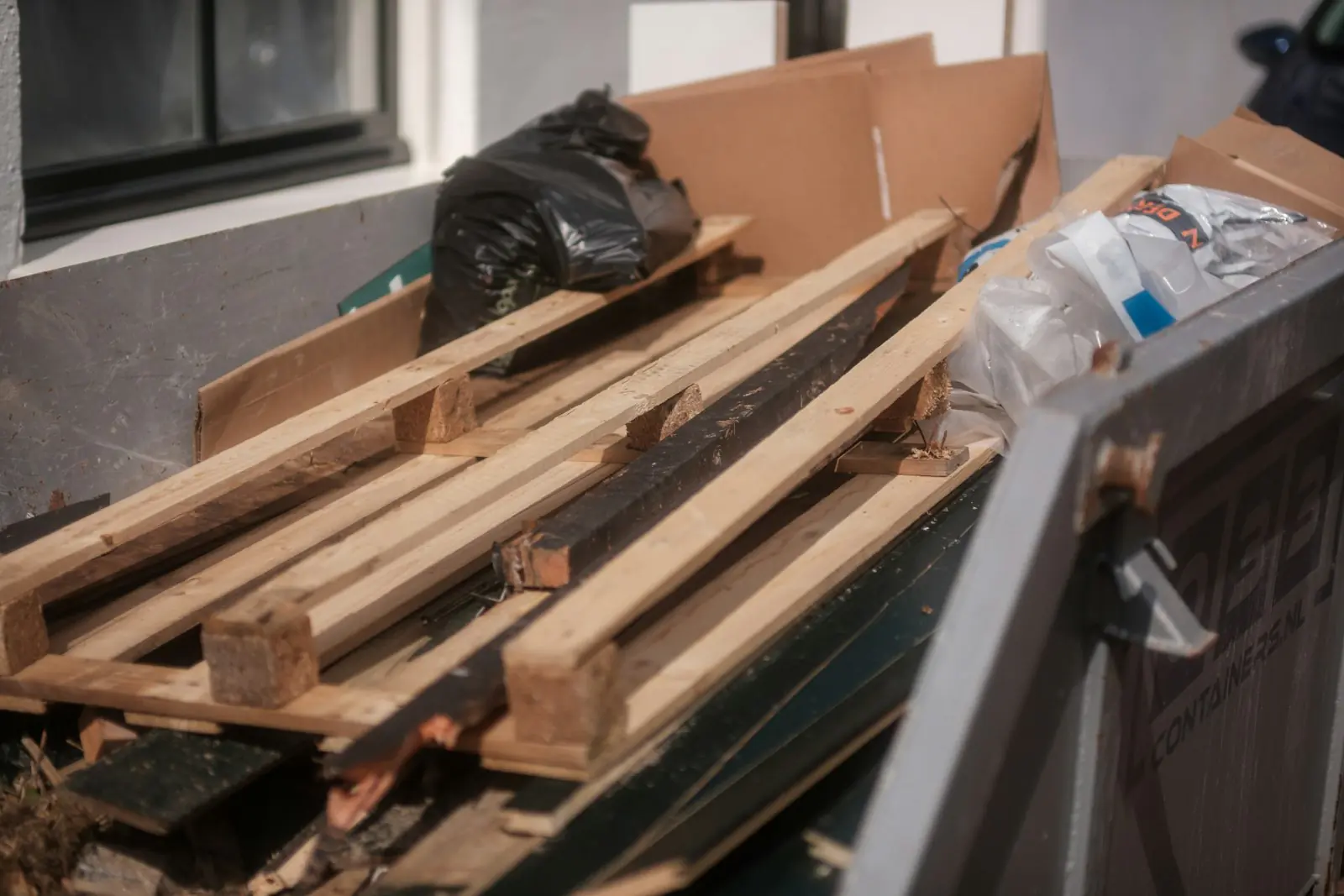
The key takeaway: not all junk removal is equal in the eyes of the IRS. Some items qualify for immediate deductions; others may affect your home’s tax basis or capital gains. Understanding the difference can save you hundreds or thousands of dollars on your 2026 tax return.
Charitable Donations & Tax Deductions
How Charitable Donations Work When You Donate Junk
When you donate items during a junk removal to a qualified nonprofit—such as Goodwill, Salvation Army, or a local Will County charity—those donations may be deductible as a noncash charitable contribution. The IRS allows you to deduct the fair market value of items you donate, as long as they are in good or better condition and the charity is a qualified organization (typically a 501(c)(3) nonprofit).
To qualify for the deduction, the item must have real utility. A broken sofa or chipped dishes may not meet the threshold. However, gently used furniture, clothing, books, appliances, and electronics donated to legitimate charities generally qualify. The value you claim must reflect what someone would actually pay for the item in your local market—not what you originally paid for it.
Fair Market Value: Setting the Right Price
Fair market value (FMV) is defined by the IRS as the price at which property would change hands between a willing buyer and a willing seller, neither being under pressure to buy or sell. For donated household items, think of Goodwill or thrift-store pricing:
- Used furniture: $50–$300 per piece, depending on condition and style
- Clothing: $2–$8 per item (in good condition)
- Small appliances: $10–$50 (working condition)
- Books: $1–$3 each
- Electronics (functional): 20–40% of original retail price
The IRS publishes guidance and many charities provide valuation guides online. Be conservative: inflating values can trigger an audit. If you claim more than $500 in noncash donations, you’ll need to file Form 8283, which requires a detailed description, condition, and FMV for each item or category.
Qualified Charities & Documentation
Only donations to IRS-qualified organizations (primarily 501(c)(3) nonprofits) are deductible. Check the IRS Exempt Organization Select Check tool before you donate. Your local Will County charities and regional food banks, homeless shelters, and job-training nonprofits typically qualify.
You must obtain a written acknowledgment from the charity listing the items and their condition. Keep this receipt along with photos of the items (especially for high-value donations) and your own valuation worksheet. The charity does not appraise value—you do—so document your reasoning.
Capital Gains & Home Sale Considerations
Does Junk Removal Affect Your Home’s Basis?
Your home’s tax basis is what the IRS uses to calculate your capital gain when you sell. If you remove junk that includes structural repairs, renovations, or permanent improvements, those costs can increase your home’s basis—which actually reduces your taxable gain when you sell.
For example, if you remove old flooring and install new tile, the cost of the tile (not the junk removal itself) increases basis. But if you simply haul away broken furniture or old household items, that does not increase basis and does not reduce your gain on sale.
To increase basis, the improvement must:
- Add value to your home
- Prolong your home’s useful life
- Adapt your home to a new use
Painting, fixing a roof, upgrading windows, and replacing HVAC systems all qualify. General junk removal alone does not.
Primary Residence Exclusion
As a Will County homeowner, you may exclude up to $250,000 in capital gains ($500,000 if married filing jointly) when you sell your primary residence, provided you’ve owned and lived in the home for at least 2 of the last 5 years. This exclusion is one of the largest tax breaks homeowners receive—and it applies regardless of whether you removed junk.
However, if you made capital improvements as part of a cleanout-and-renovation project, those improvements increase your basis, which lowers your gain further. This can be especially valuable if your home has appreciated significantly.
Home Office & Renovation Deductions
Home Office Setup & Junk Removal
If you work from home and are clearing space to set up or improve a home office, the junk removal itself is not a deductible business expense. However, any items you remove that were previously used for business (old office furniture, broken equipment) may be deductible as business asset disposal.
More importantly, if you renovate or improve the room housing your home office—such as installing new flooring, painting, or upgrading electrical outlets—those improvements can be capitalized. Junk removal that is part of a qualified improvement (e.g., clearing debris after removing old flooring before installing new) is a cost of the improvement and can be added to the capital cost basis of the improvement.
Renovation & Remodel Costs
When you renovate or remodel a room or section of your home, junk removal and debris hauling is typically part of the project cost. These costs become part of the capital improvement and can increase your home’s basis. Keep all invoices from junk removal, demolition, and debris hauling as documentation of the renovation cost.
If you file Illinois junk removal regulations questions or have concerns about how the work was done, consult with your accountant to determine what portion of the junk removal cost qualifies as part of the improvement.
Record-Keeping & Documentation Checklist
The IRS requires proof for any deduction you claim. For junk removal and donation scenarios, your documentation should include:
- Donation receipts: Written acknowledgment from the charity listing items and condition
- Photographs: Before-and-after photos of high-value items or the overall cleanout
- Valuation worksheet: A list of items with FMV estimates (keep a copy of the IRS Valuation Guide if you used it)
- Junk removal invoices: Itemized bills showing what was hauled away, dates, and amounts paid
- Diary or journal: Notes on items removed, condition, and reason for removal (especially for capital improvements)
- Form 8283: If claiming over $500 in noncash donations, file this form with your tax return
Store these records for at least three years after filing your return. The IRS may request them during an audit. Digital copies (photos, PDFs) are acceptable if you maintain them in an organized folder.
Illinois State & Will County Local Tax Rules
Illinois Income Tax & Charitable Deductions
Illinois mirrors most federal tax deductions for state income tax purposes. If you claim a charitable deduction on your federal return, you can also claim it on your Illinois state return (Form IL-1040). The state income tax rate in Illinois is a flat 4.95% as of 2026, so a $5,000 deduction saves you approximately $248 in state tax.
However, Illinois does not allow a separate state deduction for capital gains on primary residence sales—the federal exclusion is your only break. This makes capital improvements to your Will County home even more valuable: they increase your basis and reduce federal taxable gain.
Will County Property Tax & Home Improvements
Important: if you make capital improvements to your home as part of a junk-removal and renovation project, Will County may reassess your property’s value for property tax purposes. This could increase your annual property tax bill, even if it reduces your federal income tax.
Contact the Village of Lisle assessor’s office or the Will County Assessor if you plan major renovations. They can advise whether your project will trigger a reassessment. Most routine cleanouts and minor removals do not trigger reassessment—only major structural or systems upgrades do.
Noncash Charitable Contribution Form 8283
When to File Form 8283
If you claim noncash charitable donations totaling more than $500 in a tax year, you must file Form 8283 (Section A) with your federal tax return. If any single item is worth more than $500, you may need Section B, which requires a qualified appraiser’s signature. Most household junk donations use Section A.
Form 8283 requires you to:
- Describe each item or category of items (e.g., “used furniture—sofa, dining table, four chairs”)
- State the condition (excellent, good, fair)
- Provide the name and address of the charity
- Certify the FMV and your basis for the valuation
- Sign and date the form
Section A vs. Section B
Section A (for items totaling $500–$5,000) allows you to self-appraise using the IRS Valuation Guide and your own research. Most Will County homeowners use Section A for household donations.
Section B (for items over $5,000) requires an independent qualified appraiser to assess and sign off on the valuation. If you’re donating an art collection, rare antiques, or a significant number of high-value items, you may need a professional appraiser—and you’ll pay for the appraisal.
For typical junk removal donations of furniture, clothing, and household goods, Section A is sufficient. Keep your Form 8283 with your tax return for the three-year IRS record-retention period.
Downsizing, Seniors, & Estate Tax Planning
Tax Angles for Seniors & Heirs
If you’re a Will County senior downsizing or an heir managing an estate, junk removal has specific tax implications. When a senior sells a home after downsizing, they qualify for the $250,000 capital gains exclusion (or $500,000 if married) just like any other homeowner. The junk removal itself does not affect this exclusion.
However, if items removed from an inherited estate were valuable (antiques, jewelry, art), you as the heir do not owe capital gains tax on them due to the “step-up in basis” rule. You inherit items at their fair market value on the date of death, not the original cost. If you later sell inherited items, you only owe tax on the increase in value after you inherited them—typically little to nothing if you sell soon after inheriting.
This is a powerful tax benefit for junk removal for downsizing retirees in Lisle and estate executors. Your junk removal company can help you identify items worth appraising (which may be donated, sold, or liquidated) versus items that are truly junk.
Estate Executors in Will County
If you are an executor managing an estate, junk removal costs are typically paid from the estate, not your personal funds. These costs are deductible as estate administration expenses on Form 706 (federal estate tax return) or Form 1041 (estate income tax return), if the estate is large enough to require filing.
Work with the estate’s accountant or attorney to ensure junk removal and cleanout costs are properly categorized and documented. Learn more about tax implications for estate executors in Will County.
Common Tax Mistakes When Removing Junk
Mistake 1: Inflating Fair Market Value
The most common error is overstating the value of donated items. Donating a worn sofa and claiming $1,000 in value raises red flags. The IRS reviews charitable deductions, especially for high amounts. Be realistic: a used sofa in good condition is worth $100–$300, not $500+. Use online resale guides (eBay completed listings, Goodwill pricing, or Salvation Army estimates) to back up your valuations.
Mistake 2: Claiming Deductions Without Documentation
You cannot deduct a single dollar of charitable donations without a written receipt from the charity. A verbal promise or informal donation to a friend’s nonprofit won’t hold up. Always ask for an itemized receipt, even if it’s just a simple letter from the nonprofit listing what you donated and its condition.
Mistake 3: Donating to Unqualified Organizations
Donations to churches, political organizations, or informal groups may not qualify. Check the IRS Exempt Organization Select Check tool to verify the organization is a 501(c)(3) before you donate and claim the deduction.
Mistake 4: Mixing Personal Junk Removal with Business Deductions
If you operate a small business and have a home office, you cannot deduct the junk removal for your entire home—only the portion dedicated to business. Attempting to deduct personal household junk removal as a business expense can trigger an audit.
Mistake 5: Not Distinguishing Between Improvements and Personal Property
Removing old furniture is not a capital improvement and does not increase your home’s basis. Removing and replacing flooring is a capital improvement. Know the difference, or you’ll claim the wrong deductions.
Tax Timeline & Deadlines for 2026
Planning your junk removal and charitable donations with tax deadlines in mind can maximize your benefits:
- December 31, 2026: Last day to donate items and have the donation count on your 2026 return. The charity must receive the items (or the donation must be made) by this date.
- January–March 2027: Gather documentation (receipts, photos, Form 8283 drafts) for items you donated in 2026.
- April 15, 2027: File your 2026 tax return with all charitable deduction documentation attached (if claiming over $500 in noncash donations, include Form 8283).
- June 2026 onward: If you plan to make capital improvements (renovation + junk removal), budget and begin projects to complete them in 2026 so you can document and claim them on your 2026 return.
If you’re working with an estate executor in Will County, coordinate with the estate attorney and accountant on the timeline for filing Form 1041 (estate income tax return) and Form 706 (estate tax return). Estate deadlines differ from personal tax deadlines.
When to Consult a Tax Professional
DIY vs. Professional Help
If you are donating a few items totaling under $1,000 and have simple documentation, you may handle it yourself. However, if any of the following apply, consult a tax professional (CPA or tax attorney):
- You are claiming over $5,000 in noncash donations (requires Form 8283 Section B and an appraiser)
- You are managing an estate and need to file Form 1041 or Form 706
- You are selling your Will County home and need to account for capital improvements and basis
- You operate a home-based business and are deducting home-office junk removal as a business expense
- You have questions about what qualifies as a capital improvement vs. a personal deduction
A CPA familiar with Illinois tax law and Will County property tax can save you far more than their fee by identifying deductions you missed or preventing an audit by ensuring accuracy.
Frequently Asked Questions
Can I deduct the cost of junk removal itself?
The junk removal service fee is deductible only if the removal is part of a qualified capital improvement (e.g., removing debris after a renovation). If you are simply clearing out old furniture and donating it, the removal cost itself is not deductible—only the fair market value of the items you donate is deductible (if you donate them to a qualified charity). However, if you haul items away and do not donate them, there is no deduction.
What if I sell items instead of donating them?
If you sell items (via eBay, Facebook Marketplace, or a garage sale), those proceeds are generally not taxable unless you are in the business of buying and selling items. However, you also cannot claim a charitable deduction for items you sell. From a tax standpoint, selling items generates no deduction but gives you cash. Donating items generates a deduction but no cash. Choose based on the item’s condition and your time availability.
Do I need an appraisal for all donated items?
No. Items donated as part of a household junk removal totaling under $5,000 use Form 8283 Section A and do not require a professional appraisal. You self-appraise using the IRS Valuation Guide and market research. Items over $5,000 or rare/valuable items (art, jewelry, antiques) may require a Section B appraisal by a qualified appraiser.
What happens if my home is reassessed after a renovation and junk removal?
If Will County reassesses your home due to major improvements, your annual property tax may increase. However, your federal income tax basis increases by the same amount, which offsets the increase when you sell. The reassessment is not a tax penalty—it reflects the increased value. Consult your Will County assessor and tax professional to weigh the long-term benefit of the improvement against the near-term property tax increase.
Are there special rules for military families or veterans in Will County?
Illinois offers property tax breaks for some veterans and surviving spouses, but these are separate from junk-removal deductions. Junk removal tax rules apply equally to all Will County homeowners. However, if you are a veteran or military family member downsizing, check Illinois Department of Veterans’ Affairs for any applicable property tax exemptions or credits that may further reduce your tax burden.
Can I deduct junk removal if I am renting, not owning?
As a renter, you cannot deduct home improvement costs. However, if you donate items to a qualified charity, you can claim a charitable deduction for the fair market value of those items—just as a homeowner can. The deduction is based on the donation, not your ownership status. Keep your charitable receipts and Form 8283 as documentation.
How do I report inherited items I donate from an estate?
If you inherit items and later donate them, the donation is deductible based on the fair market value at the time of donation (not the inherited value). However, because inherited items receive a “step-up in basis,” there is typically no capital gain if you sell them shortly after inheriting. Consult an estate tax attorney for guidance on your specific situation, especially if the estate is large or the items are valuable.
Local Resources & Will County Government
Will County residents have access to several resources for junk removal planning and tax guidance:
- Village of Lisle: Local government services, property tax assessor contact, and municipal code information.
- Illinois EPA: Hazardous waste and recycling guidelines for household items including electronics and appliances.
- EPA Recycling Overview: Federal guidelines on donating and recycling items responsibly.
- Will County Assessor’s Office: Contact for questions on property tax implications of home improvements.
- Local Nonprofits: Goodwill, Salvation Army, local food banks, and job-training programs are common qualified recipients for donations. Verify 501(c)(3) status before donating.
Additionally, follow Illinois junk removal regulations to ensure that hazardous materials and restricted items are disposed of properly. Proper disposal protects both the environment and your tax documentation (showing responsible disposal supports your claim that items were genuinely donated or disposed of, not lost or abandoned).
Ready to Remove Junk & Maximize Your Tax Benefits?
Understanding the tax implications of junk removal is your first step. The next step is taking action: sorting items, identifying what can be donated versus what is junk, and scheduling a professional removal service that can help you document everything for your tax return.
Waste Warriors serves Will County and the Chicago suburbs with professional junk removal that works seamlessly with your tax planning. Whether you are downsizing, renovating, managing an estate, or simply clearing clutter, our team helps you identify valuable items worth donating, document the process, and ensure proper disposal.
Contact Waste Warriors today for a free estimate. Provide us with details about the items you need removed, and we’ll give you a transparent price and a detailed receipt that you can use for your tax documentation. Call (630) 286-3776 or visit our website to book your junk removal in Lisle, Naperville, Wheaton, and across Will County.
Let us handle the heavy lifting—and the paperwork—so you can focus on the tax savings.